

Vintage Tablescapes
Vintage Tablescapes: How We Create Timeless, Cozy Tables with Antique and Thrifted Finds
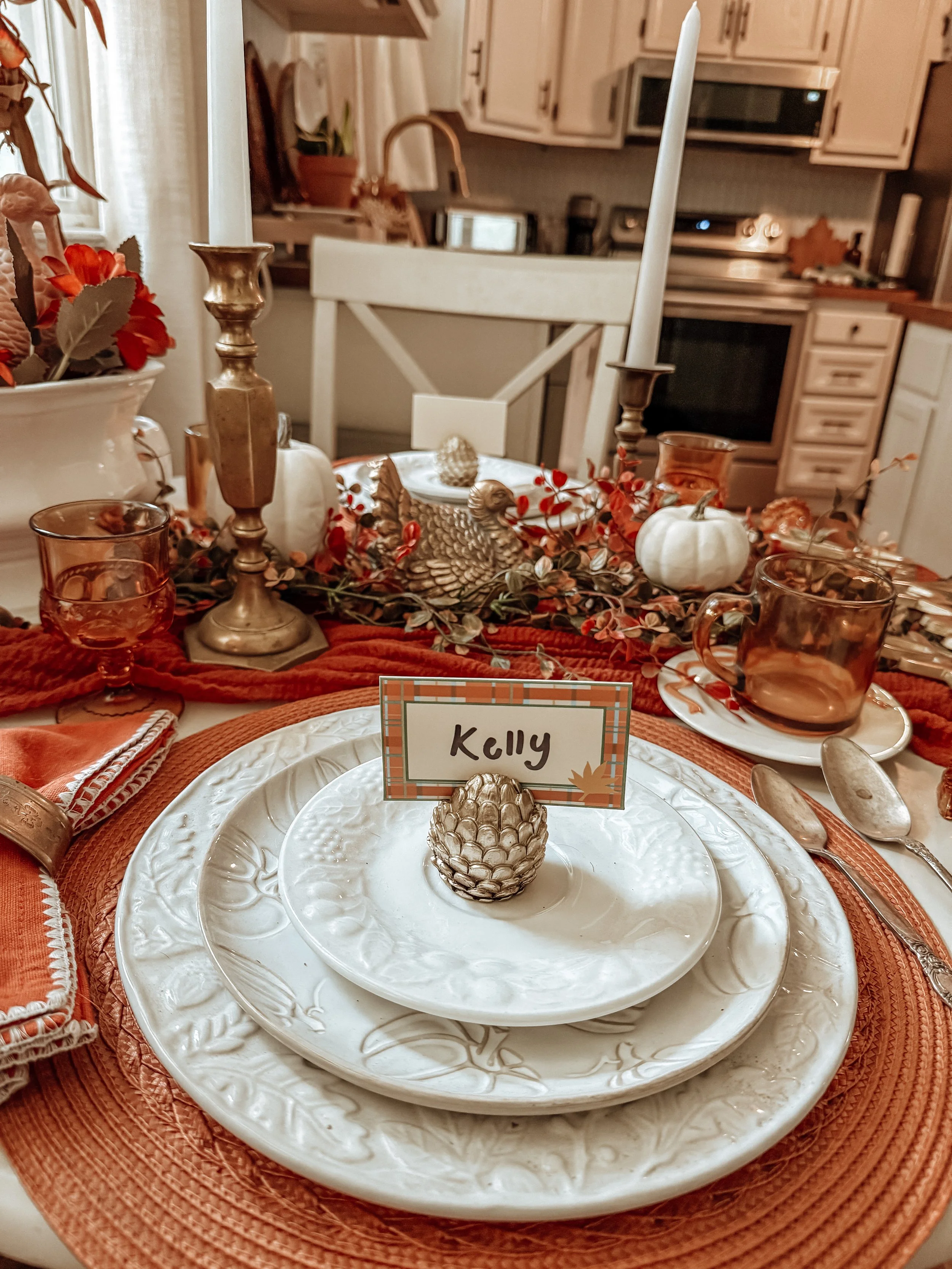
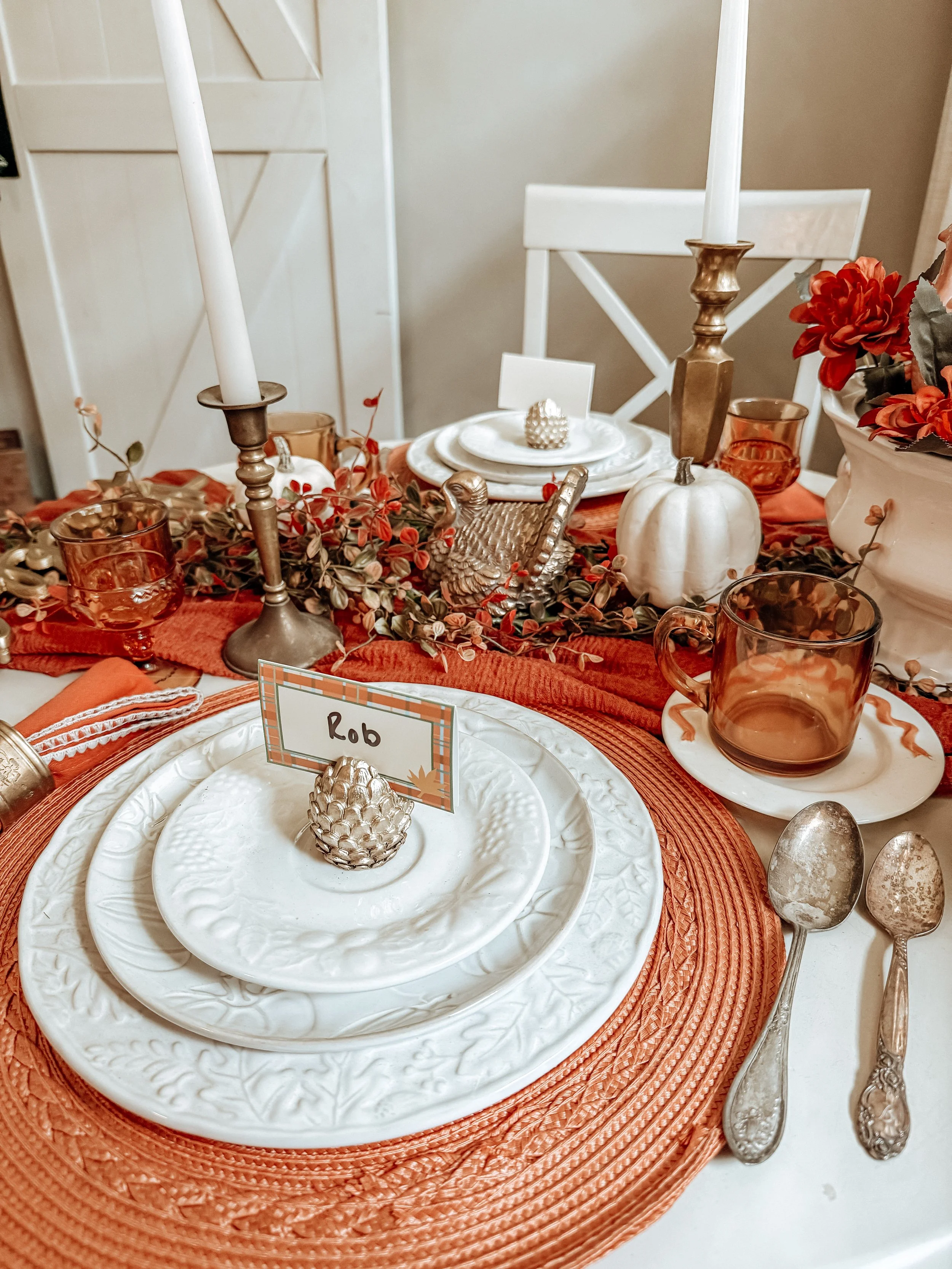
There’s a particular magic in a table dressed with history. Vintage tablescapes bring a warmth and personality that mass-produced place settings can’t replicate. Antique dishes with hairline cracks, mismatched goblets, linen napkins softened by time — these are the details that invite conversation, slow the pace, and make a meal feel like an event. Here’s how we build vintage tablescapes using antique and thrifted finds to create cozy, timeless settings in our homes.
Start with a story — and a base
Choose a focal piece. A vintage tablecloth, handwoven runner, or well-loved wooden table sets the tone. Natural linens in neutral tones are versatile and evoke an immediate sense of age and comfort.
Consider the surface. A worn wood tabletop, painted farmhouse table, or a dresser repurposed as a buffet adds character. If your table is modern, layer on texture with a runner and placemats to introduce warmth.
Keep color and mood in mind. Muted palettes — creams, warm ivories, soft greens, dusty blues, and terra cotta — feel timeless. Small pops of deeper color (burgundy glassware, cobalt plates) add drama without breaking the vintage vibe.
Mix and match with intention
Embrace eclecticism. Vintage tablescapes shine when pieces don’t match perfectly. Pair bone china with ironstone, delicate dessert plates with heavier dinner plates, and different glass styles for a curated, collected-over-time look.
Create cohesion through repetition. Repeat a color, trim, or texture every few settings to tie mismatched items together. For example, choose napkins in the same fabric or repeat brass flatware across the table.
Use scale and layering. Layer chargers, dinner plates, salad plates, and bowls to add depth. A small doily or vintage bread plate can introduce another textural element.
Hunt smart at thrift stores and antiques markets
Look beyond obvious pieces. Sought-after items include silverware sets (even partial sets), unique serving bowls, old wine glasses, cake stands, and linen napkins. Small imperfections (faint stains, chips) can enhance character when used thoughtfully.
Inspect for quality. Heavier glassware, thick porcelain, and solid wood pieces tend to last. Check seams, rims, and bottoms for cracks. For silver or silverplate, expect some tarnish — it polishes, and slight patina adds authenticity.
Think versatility. Seek pieces that can be used year-round or adapted to different seasons: plain white platters, clear or colored glassware, and neutral linens.
Layer with textures and natural elements
Fresh and dried florals add immediacy. Garden roses, sprigs of eucalyptus, dried lavender, or sunflowers — all work depending on the season. Keep arrangements low so guests can see each other across the table.
Add natural accents. Small branches, acorns, pomegranates, or citrus halves bring color and scent. For winter, clusters of pinecones or a scattering of faux snow can be charming.
Use varied vessels. Vintage teapots, milk glass vases, mason jars, and brass containers become unexpected centers for florals.
Lighting sets the atmosphere
Favor soft, layered lighting. Combine candles (taper, pillar, votive) with overhead or side lamps to create a warm glow. Vintage candlesticks in mismatched metals add character.
Consider candle safety. Use hurricane glasses or small plates under candles to protect linens. Battery-operated LED candles can be used where open flame isn't practical.
Play with reflections. Mirrored trays or metallic chargers bounce light and add a subtle luxe feel.
Place settings that feel personal
Personalize with small details. Handwritten place cards on scrap paper, sprigs tied to napkins with twine, or a small vintage ornament at each plate make guests feel attended to.
Layer flatware and glassware from different eras. A polished set of modern knives can sit comfortably with ornate antique forks; different stem heights create visual interest.
Think about function. Keep a few extra glasses, napkins, and serving utensils nearby so you can maintain the relaxed, welcoming mood without interruptions.
Use practical styling tricks
Balance negative space. Don’t overcrowd the table. Leave some open space to let the eye rest and to allow serving plates or platters to be placed during the meal.
Anchor the composition. A single strong centerpiece or a sequence of small arrangements down the table helps focus the eye. Avoid competing elements that fight for attention.
Consider ease of cleanup. Choose linens and decor that can be easily washed or wiped; mix some thrifted delicate pieces with sturdier items for everyday use.
Seasonal approaches to vintage tablescapes
Spring
Color palette: soft pastels — blush pink, mint, buttery yellow, and pale blue. Layer a vintage lace tablecloth over a worn wooden table to add texture and romance.
Centerpiece: repurpose a galvanized metal milk jug or crystal pitcher filled with peonies, ranunculus, and sprigs of lily-of-the-valley. Add a few small potted herbs (thyme or mint) for fragrance and greenery.
Tableware: mix mismatched floral china with simple white stoneware chargers. Use brass flatware for warmth and vintage crystal water glasses for sparkle.
Accents: scatter small bird figurines or porcelain eggs among fresh-cut blooms. Tie linen napkins with twine and tuck in a single sprig of rosemary or lavender.
Lighting: cluster tapered candles in mismatched candlesticks — white, soft green, and pale blue — for a gentle, romantic glow.
Summer
Color palette: vibrant but slightly faded tones — coral, turquoise, sunny yellow, and seafoam green.
Centerpiece: arrange an eclectic mix of mason jars, cobalt bottles, and low footed compotes filled with sunflowers, zinnias, and cosmos. Add citrus halves (lemons, limes) in bowls or as place-setting accents for color and scent.
Tableware: use white ironstone as a neutral base; layer with patterned vintage napkins for pops of color. Serveware in chipped enamel or worn pewter enhances the nostalgic summer vibe.
Accents: woven placemats, seashells, and a scattering of seed packets or small succulents in thrifted tins make playful additions. For a picnic-style table, use gingham runners and an assortment of picnic tins.
Lighting: lanterns or string lights hung overhead or along the table edge keep the mood casual and festive.
Autumn
Color palette: warm, muted jewel tones — rust, mustard, olive, and deep plum.
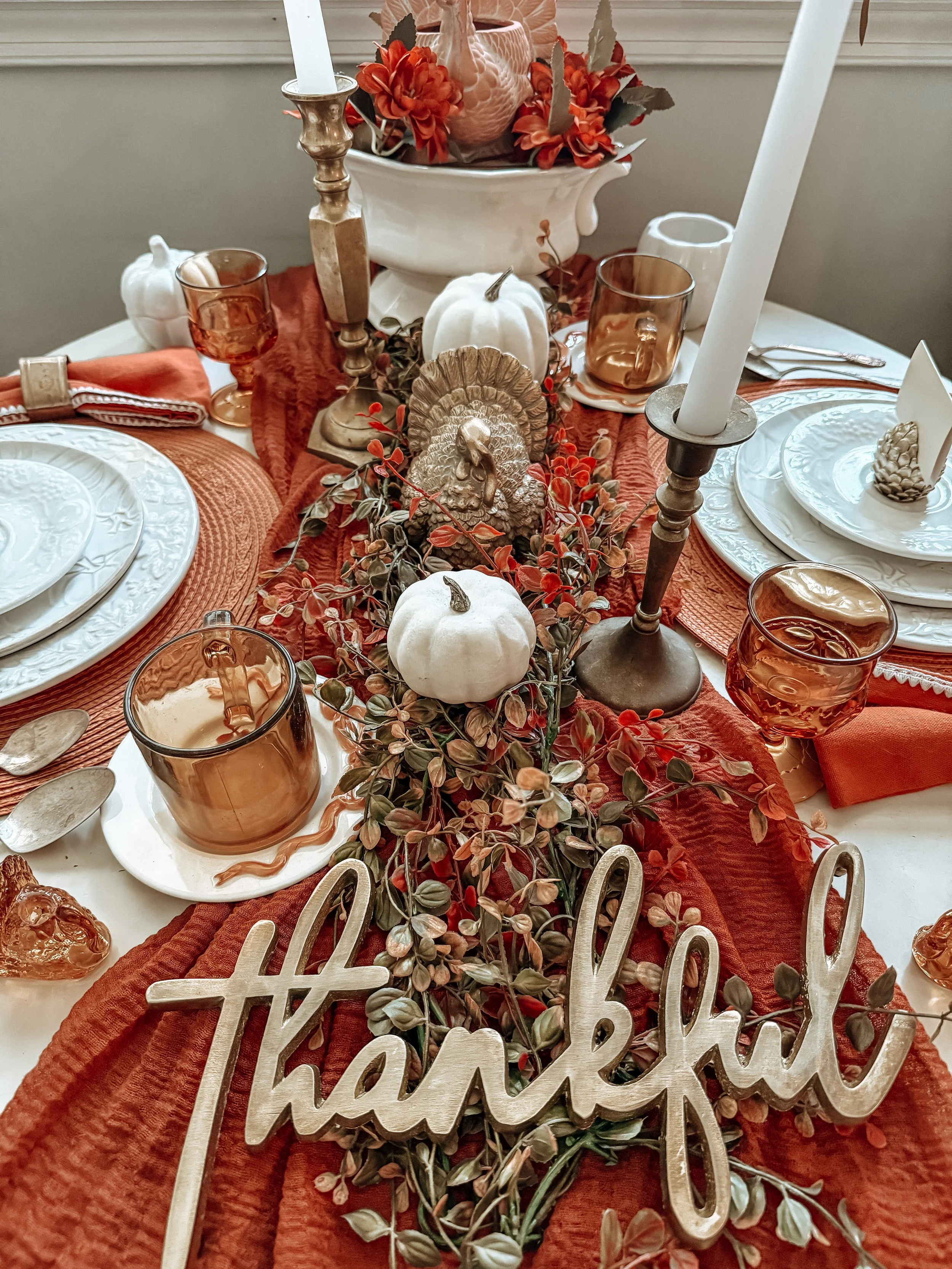
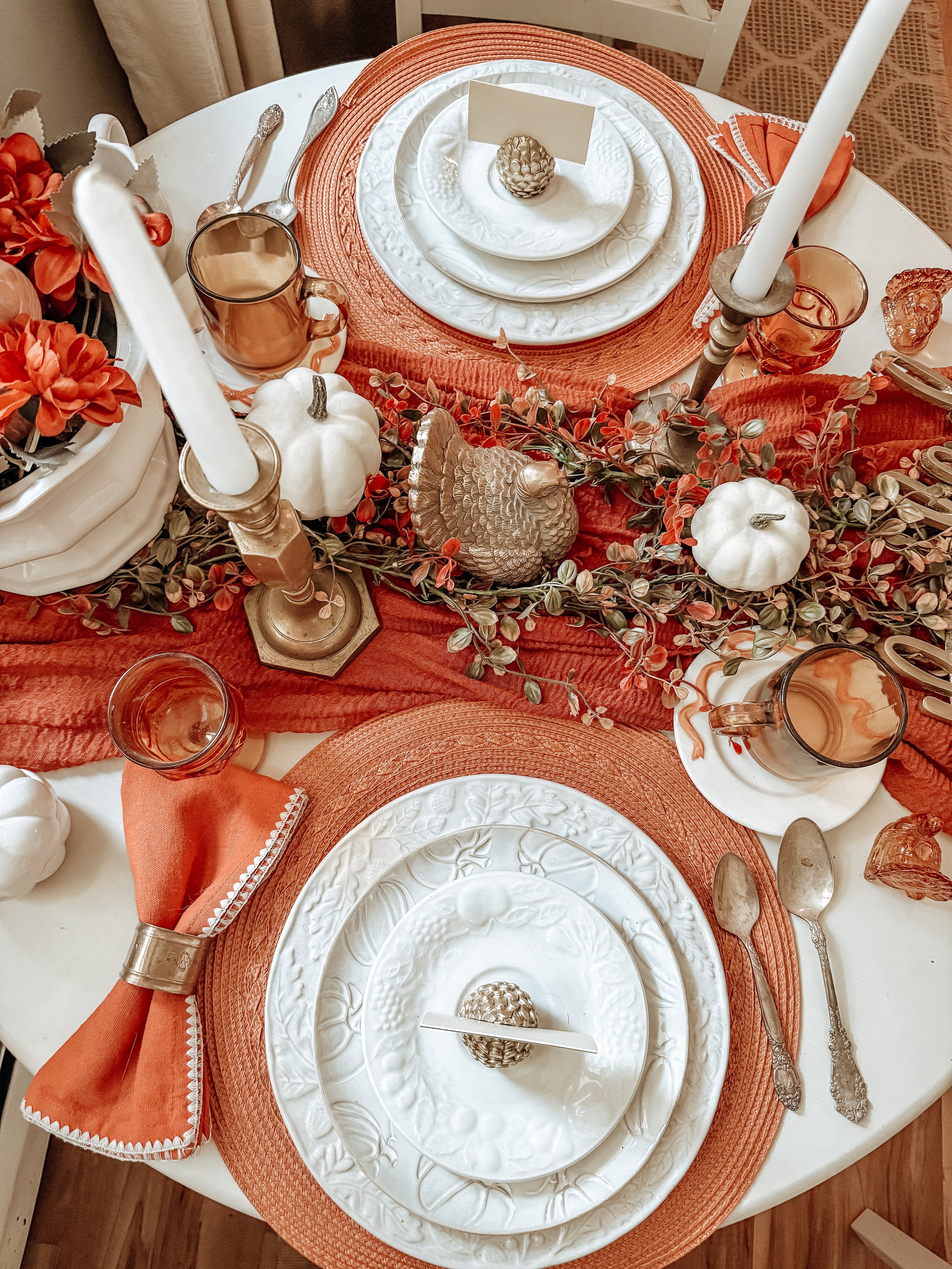
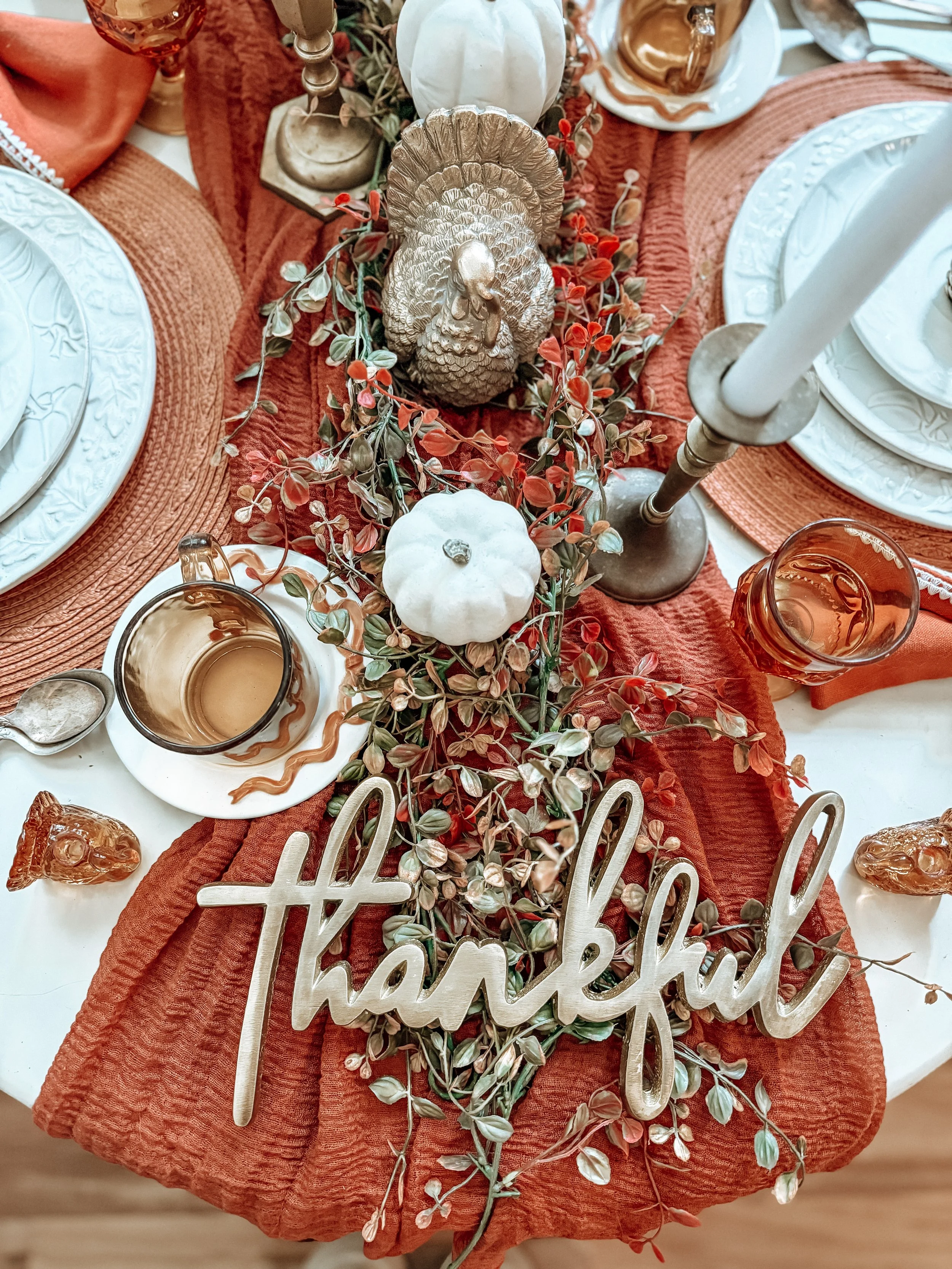
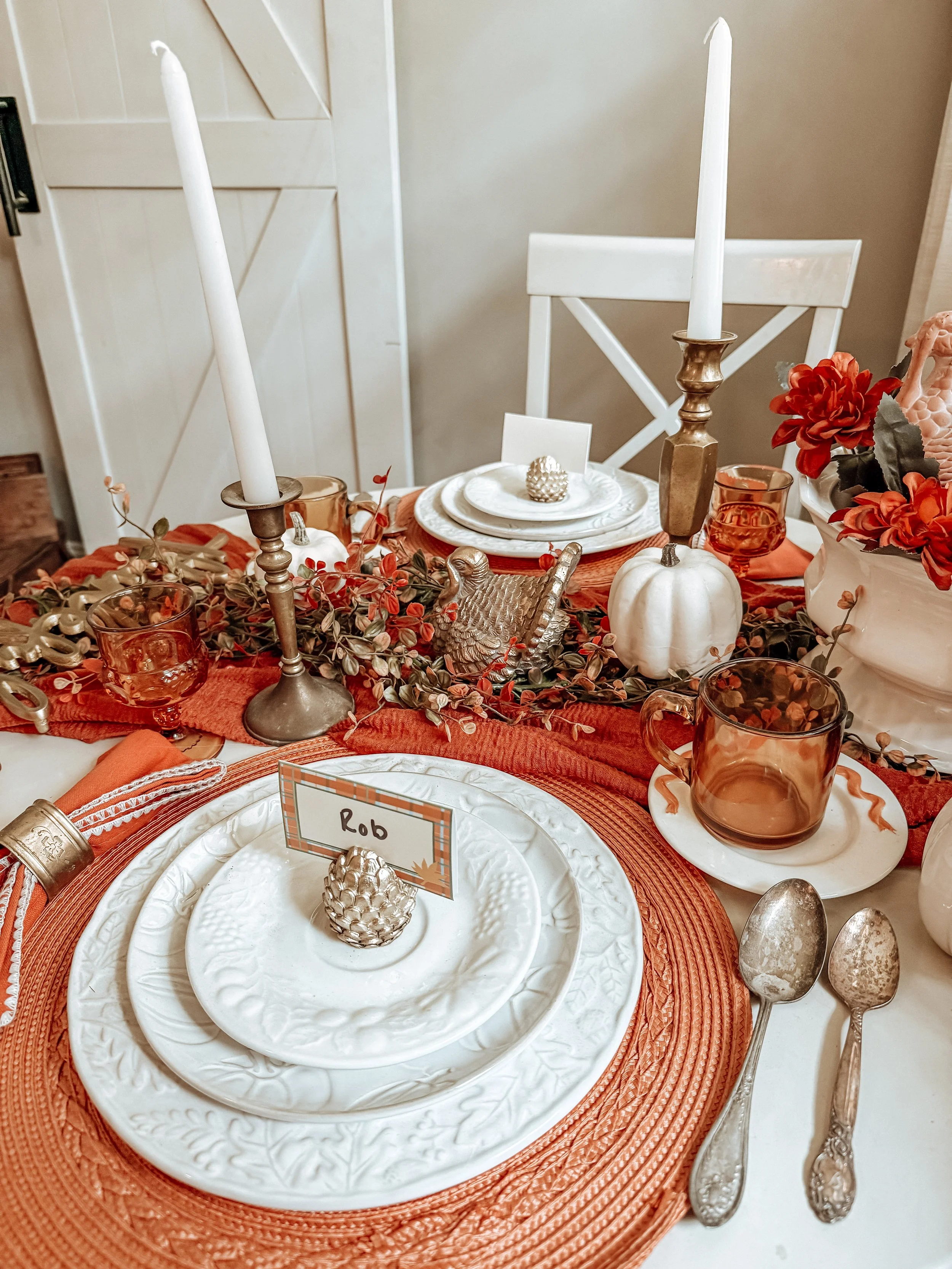
Centerpiece: use an antique wooden trough or bread bowl filled with miniature pumpkins, gourds, dried wheat, and mixed foliage (eucalyptus and oak leaves). Add a few vintage brass or copper vessels with single stems of dahlias or chrysanthemums.
Tableware: bone china with gold trim or warm-toned ceramic plates pairs well with hammered copper flatware. Layer with wool or heavy linen placemats to add coziness.
Accents: tuck in small name tags written on kraft paper tied with twine; place cinnamon sticks or star anise bundles at each setting for scent. Scatter pinecones or acorns for texture.
Lighting: use pillar candles in hurricane vases and small votives to create a snug, firelit feel.
Winter
Color palette: muted neutrals with metallic accents — ivory, slate gray, deep forest, and antique gold.
Centerpiece: a low, sprawling arrangement of evergreens, magnolia leaves, and dried hydrangea in a silver or mercury-glass bowl. Intermix with vintage ornaments, frosted pinecones, and strings of pearls or bead garlands.
Tableware: mix ivory dinner plates with scalloped-edge vintage salad plates in soft gray or blue. Use antique silver flatware and crystal stemware for an elevated, timeless look.
Accents: fold velvet or heavy linen napkins and secure with vintage brooches or simple metal napkin rings. Add handwritten menu cards on cream cardstock for a refined touch.
Lighting: lean on candlelight — tapered candles in silver candlesticks and tea lights in mercury-glass votives to reflect light and create warmth.
All-season tips for vintage tablescapes
Embrace imperfection: small chips, crazing, or mismatched pieces are part of the charm; arrange intentionally rather than forcing uniformity.
Texture matters: mix fabric weights, metals, and natural elements to keep the table visually layered and inviting.
Scale and height: vary vessel heights to create interest—combine low compotes with taller candlesticks or bottles.
Scent control: balance fresh florals with non-overpowering elements (citrus, herbs, spices) so fragrance enhances rather than overwhelms the dining experience.
Practicality: protect delicate surfaces with clear placemats or chargers under plates when needed; keep table traffic in mind for casual gatherings by choosing lower centerpieces.
Sourcing: hunt thrift stores, flea markets, and family heirlooms for unique pieces; small repairs or a consistent color palette can unify diverse finds.
Quick seasonal checklist before guests arrive
Clean and polish vintage pieces; stabilize wobbly candlesticks.
Layer linens and test placement for symmetry and flow.
Pre-trim candles and have matches/lighter accessible.
Assemble centerpieces early and refresh florals within an hour of guests arriving.
Keep a spill kit (cloth